
End of project report lupiro
| youth self employment foundation (YOSEFO) |
| END OF PROJECT REPORT |
| AGRICULTURAL PROGRAM FOR LUPIRO |
| October 2015 |
| [Type the abstract of the document here. The abstract is typically a short summary of the contents of the document. Type the abstract of the document here. The abstract is typically a short summary of the contents of the document.] |
1.0 Background
Partnership between MICHE and Youth Self Employment Foundation established in 2004.MICHE the financer of UKIJA assigned YOSEFO to take over the project. A three years grant agreement were signed and YOSEFO were required to build a sustainable microfinance institution that will continue facilitating access of financial service in Ifakara town and Kilombero District at large. In addition to that YOSEFO was also required to supervise the implementation of Education project that was financed by MICHE. In 2007, YOSEFO expended its operations to include agricultural loans which aimed at addressing the problem of lack of credit to smallholder farmers in Kiliombero and Ulanga Districts in Tanzania. Access to credit was viewed as one of the key input for increased productivity of farms of rural farmers. The project concept also include skills development was an important input for the success of the project.
2.0 Objectives and expected results of the project
The overall objective of the project is to increase household food security and cash income of households through increase of agricultural production. The specific objective of the project is to increase access financial services (mainly micro-loans) in rural areas for agricultural purposes. The project increased the capacity of YOSEFO to lend to smallholder farmers by proving funds for on-lending.The expected results of the project included the issuance of loans to 200 clients who will be able to cultivate on average 3 acres each, making a total of 600 acres. Therefore, the project was expected to support 1,200 (an average of 6 members per household). It was expected that participating households will be food secure for a period of twelve months by the end of the third year.
3.0 Project implementation
Project Area
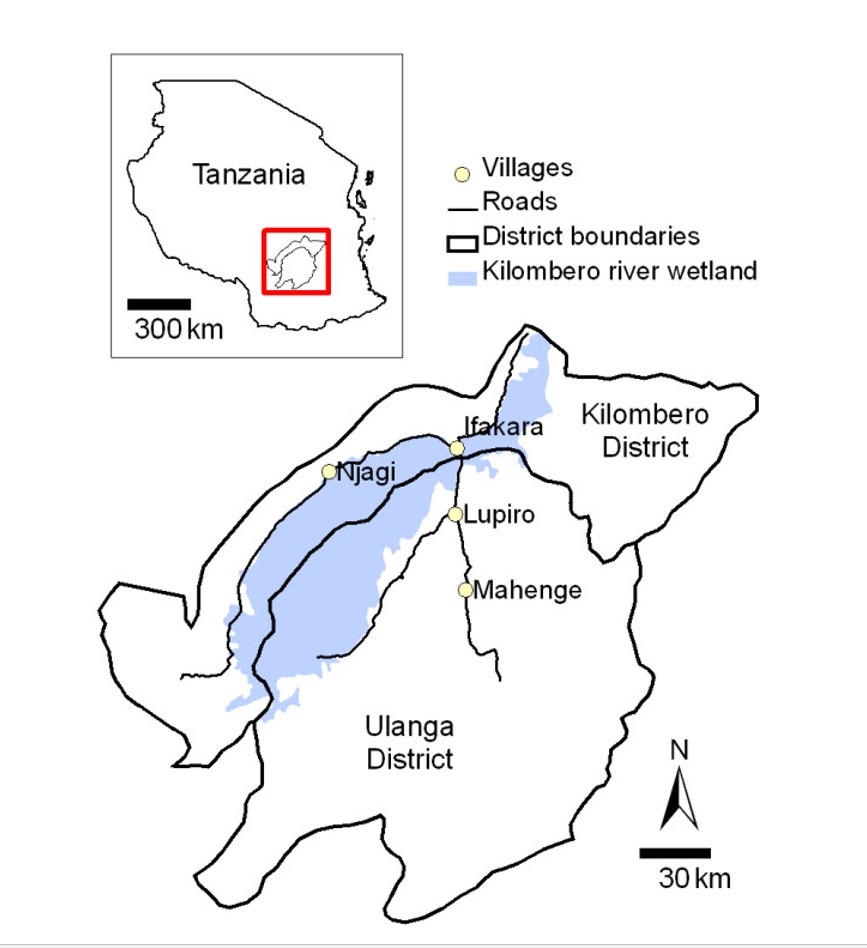
The project area is located in Lupiro ward which is found in Ulanga District in Morogoro region. The villages covered in the project include Minepa, Milola, Lupiro and Kichangani. The presence of YOSEFO in these villages started way back in 2009 when the organization started issuing non-farm loans.
Ulanga Districts in one of the five Districts in Morogoro region. Ulanga District is one of the six districts of the Morogoro Region of Tanzania. The administrative seat is in Mahenge. It covers 24,460 square kilometres of which 4,927square kilometres is in forest reserves and has a population of 194,209 Administratively the district consist of five divisions namely; Malinyi, Mtimbira, Lupiro, Vigoi and Mwaya. Lupiro division , where the project is located made up of Lupiro and Kichangani wards. Our project’s focus is the five villages that form lupiro ward. Rice is the prominent crop in Ulanga District, Lupiro ward and village inclusive. The villages are located along one of the most fertile valleys in Tanzania, Kilombero Valley. The target villages do not have large scale farmers. Majority of the farmers in the project cultivate between 2 and 5 acres of rice. Rice is used as both food and cash crop.
Project beneficiaries
Project beneficiaries were typically stallholder farmers trying to make a living from cultivating rice as a source of staple food and cash. The plot sizes varied between an acre and 5 acres of rice/paddy in low lands of Lupiro ward. The smallholder farmers also farm maize and beans. The target beneficiaries of the project were only those smallholder farmers who have borrowed at least three times for non-farm activities. Therefore, a loan for agriculture was an add-on loan for good customers of non-farm loans or enterprise loans. The project targeted both women and men.
Prior to the project implementation, the target beneficiaries experienced very loan yield of about 3 to five bags of paddy per acre. This was below the potential of 30-40 bags per acre.
With lack of farming skills and management, basic inputs and limited labour resources the funding was needed. The farmers were able to use cash from loans to supplement household level capacity.
Project Partners
The primary partners of project were YOSEFO and Miche Association of Latina in Italy who have partnered for various projects since 2004. The two organizations are not experts in farm management and entrepreneurship training. The main funding of the project was provided by the Valdesian Church
The following were the main project partners:
Valdesian Church
The Valdesian Church of Rome Italy was the main funder; the provided a grant that funded client training and seed money for on lending.
Miche Association
Miche Association was the main link between Valdesian Church and YOSEFO. The association was the one disbursing funds to YOSEFO and ensuring that receipts are obtained and submitted to the main funder, the Valdesian Church. Miche Association made available Patricia De’llorbo to provide on sight advice. Other members of Miche Association visited the project on various occasions.
Youth Self Employment Foundation (YOSEFO)
YOSEFO implemented the project that included providing the staff which supported the project, organizing training, monitoring loans and other project activities. YOSEFO also provided counterpart funds for on lending. A total of Tzs of loan fund was provided by YOSEFO.
Trainers
Farm management training was provided by Mkindo Training centre which specializes in rice farming, Centre for Microfinance and Enterprise Development (CEMIDE) provided entrepreneurship and business skills training and TOAM provided training on sustainable agriculture
Field Set-up
- Field support and field farmer schools
In order to execute the project YOSEFO availed the services of its Branch Manager of Ifakara to be the overall in-charge on the group. Activities undertaken by the Branch Manager included identifying beneficiaries of the project among YOSEFO’s clients, organizing and supervising training, loan appraisal, approval and collection of repayments.
YOSEFO also assigned a field officer stationed at Lupuro to supervise project activities at the grassroots level. He was instrumental in ensuring that loans are properly used, clients are trained and loan is repaid on time. The field officer also participated in the training organized by the project.
As a strategy to sustain and to continue sharing knowledge, the project established five Farmer Schools or demonstration plots locally known as “Shamba Darasa”. The farms schools were established with the assistance of trainers from Mkindo Training Centre. The development of Farmer Field Schools aimed at providing a platform for farmers to meet regularly for the purpose of addressing issues of common interest collectively, discuss measures and solutions.
Ten farmer schools have been established by the project as of June 2015. The farmer field schools include Minepa, Itete Njiwa, Itete Mianzani, Mtimbira, Sangule, Kichangani, Lupiro and Kivukoni. At each farmer field school farm there is a half an acre demonstration farm. The demonstration farms are managed by YOSEFO Client who participated in the various training organized and managed by the project. Table 1 provide an overview of distribution of farmer field schools supported by the project.
Table 1: Distribution of field farmer school
| Name of farmer field school | # of active members | |
| 1 | Minepa | 10 |
| 2 | Itete Njiwa | 11 |
| 3 | Itete Mianzani | 12 |
| 4 | Mtimbira | 16 |
| 5 | Usangule | 12 |
| 6 | Kichangani | 18 |
| 7 | Lupiro | 20 |
| 8 | Kivukoni | 30 |
Source: YOSEFO’s branch Office-Ifakara
Entrepreneurship and business training
YOSEFO does not in-house training capabilities on entrepreneurs and business skill hence such training was outsourced. The training was conducted by Centre for Microfinance and enterprise development. Training covered the following topics:
Entrepreneurship skills: The focus was enable smallholder farmers to learn and appreciate creativity, build a positive mind towards changes their lives, how to identify business opportunities and position themselves for better reward of the work.
Business skills: The business skills topics covered included costing and pricing, marketing, agricultural value chain and sales and marketing techniques. This subject matter also included training on understanding agricultural products business cycles, impact of seasonality, specific market structure for farm produce and overall agricultural value chain.
Training on rice farming skills
The first course was conducted by TOAM on organization which promotes organic farming and sustainable agriculture. Participants acquired skills on soil fertility, how to prepare and use natural pesticides, sustainable methods of land use, how to prepare land for planting rice, best practice in rice farming and the dangers of GMOs. The training was conducted during 2011/2012 farming season and was conducted in Kiswahili, a language spoken and well understood by all the participants.
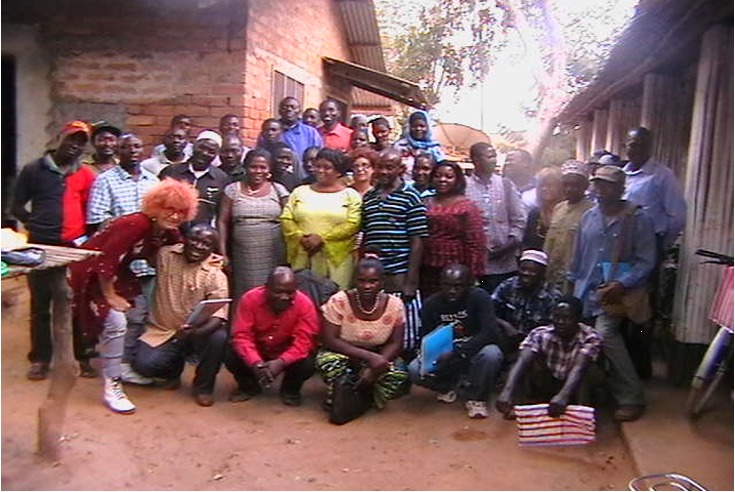
Participants of the 2011/2012 farm season training program
The 2012/2013 training was held at Mkindo rice farm training centre which is sponsored by the Government of Indonesia. A total of 50 farmers and two officials from YOSEFO (Branch Manager and Field Officer) and one official from Miche also attended the two weeks residential training program. The main focus was imparting of rice farming skills to smallholder farmers based on technical and on-hand practical skills of the trainers.
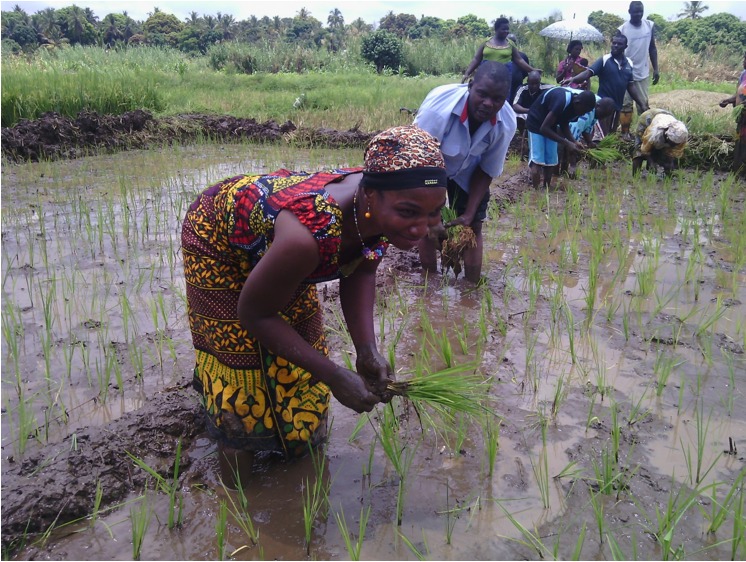
Practical skills training on rice farming.
During the 2013/2014 and 2014/2015 training was moved back to Lupiro but with same trainers from Mkindo. Once again training focused rice farming but it included establishment field farm schools.
Lending program
The project included a lending component in order to enable smallholder farmers to acquire farm inputs, pay for labour, packaging and transportation of rice after harvest. Loans for agriculture were given only to YOSEFO clients who have successfully repaid three business loans. Total project cost was Tzs 115, 445 euros with YOSEFO contributing euro 22,447. All loans were issued and repaid in Tanzania Shillings. Table 2 show the project’s financial report.
MICROFINANCE AGRICULTURAL PROGRAM FOR LUPIRO
PROJECT’S FINANCIAL REPORT
in euros
| Year/Season | Miche Donation | Expenses for loans | Expenses for training | Total Project Expenses | ||
| 2010 | 12,000.00 | |||||
| 2011/2012 | 25,000.00 | 17,860.00 | 4,361.00 | 22,221.00 | ||
| 2012/2013 | 25,000.00 | 30,450.00 | 12,817.00 | 43,267.00 | ||
| 2013/2014 | 26,000.00 | 36,046.00 | 6,245.00 | 42,291.00 | ||
| 2014/2015 | 5,000.00 | 7,668.00 | – | 7,668.00 | ||
| Total | 93,000.00 | 92,024.00 | 23,423.00 | 115,447.00 | ||
| Total Miche Donation | 93,000.00 | |||||
| Total Project expenses | 115,447.00 | |||||
| YOSEFO Contribution | 22,447.00 | |||||
5.0 Project results.
The project had key milestones to achieve that included providing access to skills and credit to at least 200 farmers in the project areas; assist farmers to achieve higher yields in rice production in a sustainable manner and organize farmers in working groups.
- Access to skills
In order to increase yield in rice farming in a sustainable manner and with appropriate income reward, farmers received entrepreneurship and business skills training and sustainable rice farming training. A total of 200 have been trained. Some farmers havev access rice market in Zanzibar and other places outside their villages as a result of the training on business skills
- Access to finance by smallholder farmers
YOSEFO has operated in the project area since 2007 but the main focus was on business (non-farm loans). The project provided an opportunity for smallholder farmers to access loans specifically designed for agriculture and in particular rice farming. Access of loans for agriculture is one of the major challenges faced by smallholder farmers.
- Higher yield in rice production
At the start of the project, rice farmers harvested not more than three bags of paddy per acre instead of a minimum of 25 bags achieved by some farmers in area.
Table 2: Yield results.
| Average yield per acre | # of farmers | percentage |
| 3-5 bags | 3 | 6 |
| 6-10 bags | 22 | 44 |
| 11-10 bags | 20 | 40 |
| 16-20 bags | 3 | 6 |
| Above 20 bags | 2 | 4 |
The table 2 indicate a positive result in yield improvement but much needs to be done for farmers to achieve their maximum potential. Through the field farmer schools YOSEFO will continue to provide education on farming skills, provide loans for agriculture and put more emphasis on farm management techniques.
5.0 Conclusion and the way forward
5.1 Conclusion
Starting from a situation where farmers were we getting as low as 1 bag of paddy per acre to the current situation where, good agricultural practices have been adopted, access agricultural finance has been improved and farmers have become prominent players in the rice value chain, is a very big achievement.
This project has shown farmers how to turn rice production and marketing into a commercially viable business. The true potential of rice as both a source of food and cash income was on discovered by the farmers prior the implementation of the project. Today, farmers are very eager to farm a small size of land with desire for better farm management and higher yield results.
However, post-harvest losses and access to better market remain a major challenge for the farmers. The project with funding from YOSEFO managed to link the farmers with the market through an exchange program with traders from Zanzibar. Some farmers managed to secure a market in Zanzibar. The project also uncovered that storage at household level is a major challenge for smallholder farmers. When farmers get higher yields they face a challenge of storage facility at household level. Many farmers are forced to store their excess produce in warehouses owned by millers who end up selling low prices as the cannot cope with storage charges.
Further to all the important achievements listed, the project has also provided very important lessons and experiences which are invaluable in developing new project in support of smallholder farmers. These experiences are mainly with regards to activities carried out, to assumptions made vs. realities in the field and to elements which were not sufficiently taken into consideration during the project design.
5.2 Way forward
YOSEFO will continue to provide access to finance to smallholder farmers in the area and expect to expand its coverage. In order to assist farmers realize YOSEFO expect to build warehouses at that will assist farmers to store their produce either for household consumption or sale. The initial plan is to build a warehouse at Lupiro and Kibaoni with a capacity to store up to 1500 tons of paddy. Plans are also underway to look for more funding for training and strengthening of Field Farmer schools.
